

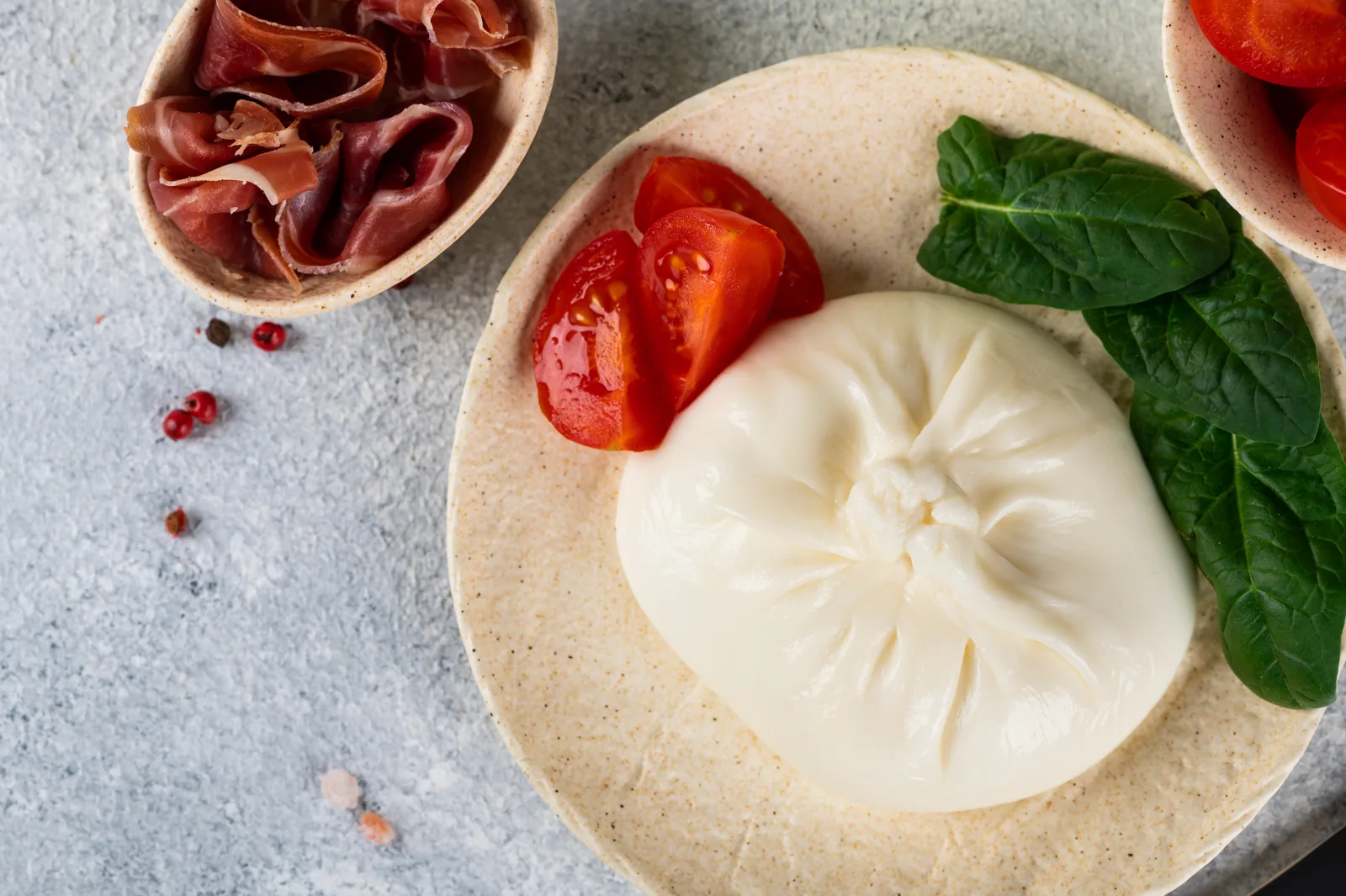
Two white cheeses, two very different first bites. Fresh mozzarella has a gentle springiness and a milky flavour; burrata opens to reveal a soft, creamy filling. They can appear alongside the same tomatoes, basil and olive oil, yet change the character of a dish completely.
If you are comparing burrata vs mozzarella on an Italian menu, the most useful question is what you want from the cheese. Should it hold its shape in a salad, melt across a pizza, or become the creamy centre of a sharing plate? Understanding that difference makes the choice easier—and explains why some dishes use both.
The main difference is inside the cheese
Fresh mozzarella is a stretched-curd cheese with no added cream filling. Cut a ball in half and you find cheese throughout, although some milky liquid may escape. Its texture is soft and yielding, with enough structure to slice, tear or arrange between pieces of tomato. A well-made mozzarella does not need an elaborate recipe to make an impression: its appeal lies in that fresh dairy flavour and the way it feels as you bite into it.
Burrata has a different construction. Its outer pouch is made from stretched curd, while the centre contains shreds of curd mixed with cream. That filling is called stracciatella. During production, the curd serves two purposes: some becomes the pouch, and some becomes the shredded filling. Burrata is therefore not simply a larger mozzarella, nor is its centre just liquid cream. You get the tender outer layer and the softer mixture inside in the same mouthful.
| What you notice | Fresh mozzarella | Burrata |
|---|---|---|
| When you cut it | Cheese throughout; may release milky liquid | A pouch enclosing curd shreds and cream |
| Main texture | Soft, gently elastic, easy to portion | Tender outside, loose and creamy inside |
| On the plate | Works as slices, torn pieces or small balls | Often becomes the centrepiece of a dish |
| A useful starting point | Choose for distinct bites of cheese | Choose for a creamy contrast |
For a simple comparison at home, try each cheese with the same accompaniments rather than tasting them in two elaborate recipes. A little tomato, basil and bread keeps the focus on the cheese. Start with a bite on its own, then try it with the other ingredients: this makes it easier to identify the texture you enjoy.
Italian cheese names can describe different things: the milk, the structure or a protected regional product. Fior di latte commonly identifies cow’s-milk mozzarella on a menu—a fresh stretched-curd cheese rather than a cream-filled one. Buffalo mozzarella refers to the milk source. The protected cheese Mozzarella di Bufala Campana DOP is made exclusively from buffalo milk. It is still mozzarella, without burrata’s separate cream-and-curd filling.
Burrata is not another name for buffalo mozzarella, and the word “burrata” does not automatically mean buffalo milk. Burrata can be made from cow’s milk; the protected Burrata di Andria PGI is specifically a cow’s-milk product. Its defining structure brings together the stretched-curd pouch and the cream-and-curd filling.
Stracciatella, in this cheese context, is the loose filling rather than the whole pouch. Think of the names as answering separate questions: “bufala” tells you about the milk, “burrata” tells you about the filled cheese, and “stracciatella” identifies the creamy shredded mixture. This is useful when reading a menu, because a pizza topped with stracciatella will not necessarily arrive with a whole ball of burrata. If a particular milk source matters to you, ask about the actual product rather than guessing from its appearance.
Which works better in salads and sharing starters?
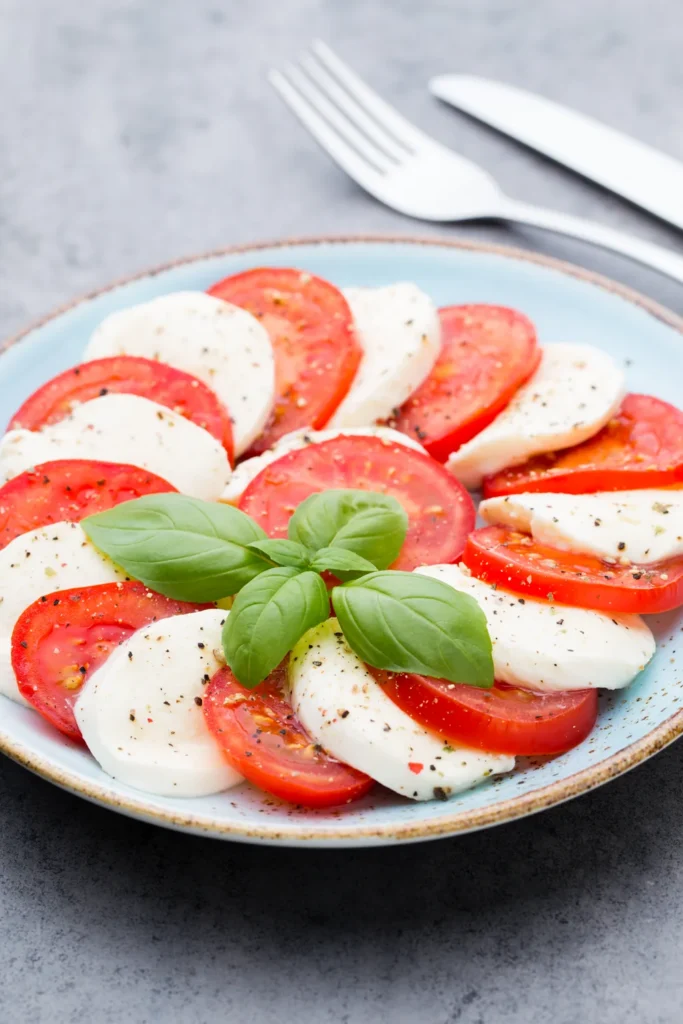
For a tomato-and-cheese salad, start with the eating experience you prefer. Sliced fresh mozzarella lets you build a forkful with a recognisable piece of each ingredient. Small mozzarella balls are convenient when you want cheese distributed throughout a chopped salad. Burrata makes more sense when you want to cut into a centrepiece and combine a little of the filling with the other ingredients as you eat. Both can accompany tomatoes and basil; the choice changes the texture rather than turning one combination into the “correct” version.
Our suggestion for a burrata sharing plate is to keep the supporting ingredients selective: tomatoes or roasted peppers, a little olive oil, something leafy and bread with a crisp surface. Fruit can take the plate in a different direction, too: try peaches, melon or grapes for a sweeter contrast. The aim is to leave room for the cheese instead of hiding it beneath several competing dressings. Choose one direction for the plate, then let the ingredients work together.
For a table sharing several starters, ask about the portion size before ordering: the number of cheese balls in a dish does not tell you how substantial the whole plate will be. Consider what everyone wants to try and whether the cheese is the main starter or one taste among several. Our guide to Italian meal courses can help you fit it into the rest of dinner.
Burrata or mozzarella for pizza and pasta?
For pizza, first distinguish fresh mozzarella from low-moisture mozzarella. The fresh cheese can be used on pizza, but it is not identical to the firmer blocks sold for shredding. Low-moisture mozzarella is a separate practical choice when you want grated cheese distributed over the surface. Its firmer texture makes it easier to shred and portion across the dough, rather than arranging individual pieces of fresh cheese. “Mozzarella” alone therefore does not tell you everything about how a pizza will look or eat.
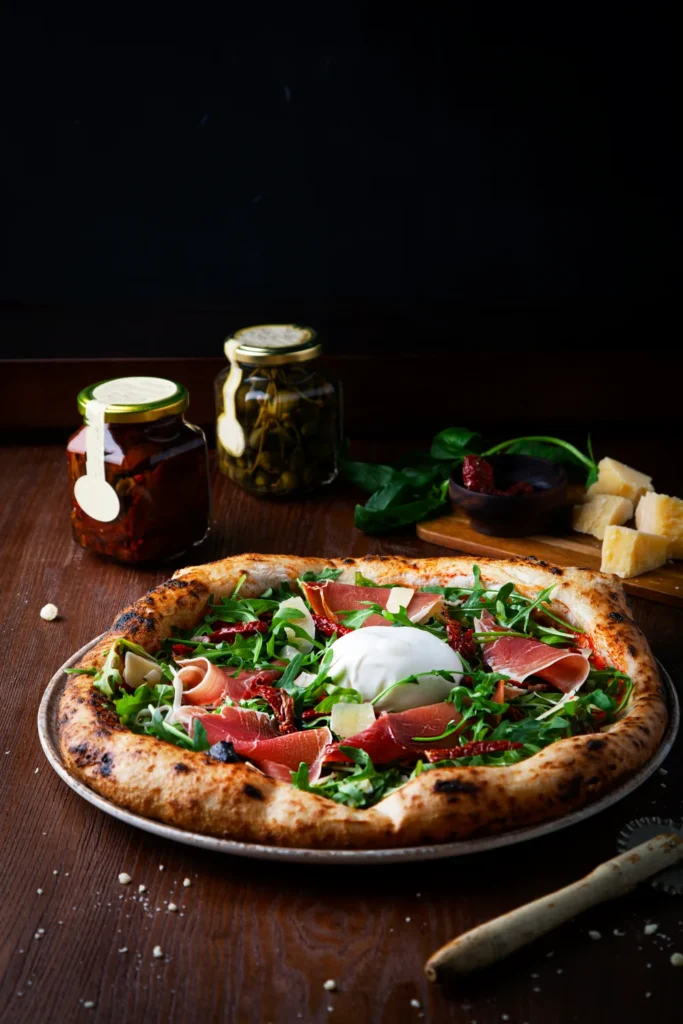
Burrata can play a different role: a finishing topping that introduces a soft centre to the baked pizza. Adding it just before serving is one way to preserve the contrast between crust and creamy cheese, giving each slice a combination of baked and fresh elements. That does not mean burrata can never be heated. It means that, if the filling is the part you are excited about, you may want it to remain a distinct feature rather than disappear into the rest of the topping.
When ordering, ask whether the burrata is served whole, portioned or spread over the pizza. Those versions invite different expectations, especially if you are sharing. A whole centrepiece can be divided between slices; separate portions give each person some from the start. Neither presentation is inherently superior. It is also worth reading the other toppings before deciding: cheese is only one part of the balance, as we discuss in our guide to choosing Italian pizza.
For pasta, think about whether you want cheese incorporated into the dish or kept as a finishing element. A spoonful of burrata filling alongside tomato-dressed pasta creates a different experience from mozzarella melted into a baked dish. This is a useful way to choose between menu descriptions, rather than treating the cheeses as interchangeable additions. A simple question for the server—“Is the cheese mixed through or served on top?”—often tells you more about the result than the cheese name alone.
Can you substitute burrata for mozzarella? Sometimes, but expect the dish to change. In an uncooked tomato salad, either can be a delicious choice: arrange mozzarella in pieces, or make burrata the centre of the plate. In a sandwich you intend to carry with you, think about whether you want a filling that stays neatly portioned or one that is deliberately loose and creamy. If a recipe specifies grated low-moisture mozzarella, replacing it with a whole burrata is a more substantial change than swapping one fresh cheese for another.
The simplest approach is to identify the cheese’s job before making the substitution. Is it there to provide distinct pieces, a melted layer or a creamy finish? If you want to preserve the original recipe’s texture, use the specified cheese. If you want to experiment, change one element at a time so you can judge the result. This is more useful than assuming that a creamier cheese will improve every dish.
Buying, serving and storing fresh cheese
When buying either cheese, read the complete label: the milk source, ingredients, storage instructions and guidance after opening. Do not apply one producer’s shelf-life advice to every fresh cheese. Packaging matters, too: water-packed mozzarella and cheese sold in other types of packaging may carry different after-opening instructions. Keep fresh cheeses refrigerated according to their labels, use clean utensils and follow the stated instructions for leftovers. Check the actual package before planning how much cheese to open for a meal.
For presentation, prepare the rest of the plate before opening or portioning the cheese. That gives you time to arrange the vegetables, dress the leaves and put out the bread without leaving a half-finished cheese dish waiting. With burrata, consider opening it at the table if you want the contrast between the pouch and filling to be part of the experience. With mozzarella, decide whether even slices or more informal torn pieces suit the dish. These small choices can make a simple plate feel considered without adding more ingredients.
Discover the difference at Da Vinci
At Da Vinci, the combination can be explored within a single dish. Our online menu lists Pizza con Burrata e Bresaola with tomato sauce, mozzarella, air-dried beef, burrata and rocket. It is a useful example of why the two cheeses need not compete: the recipe includes both. The menu also lists a pizza with mozzarella, stracciatella, cherry tomato and basil pesto, offering another way to try the creamy shredded cheese.
If you are joining us in Lapta, ask our team about the current selection and how each dish is served. Whether you prefer a fresh bite of mozzarella or the soft centre of burrata, the best choice is the one that fits the meal you want—not simply the name that sounds more luxurious.