

You do not have to be vegetarian to want a dinner without meat. Sometimes a plate of ricotta ravioli, a tomato-rich aubergine dish or a pizza with an interesting combination of cheeses is simply what you feel like eating. The useful question is not which dish can survive having its main ingredient removed. It is which dish already offers the flavours and textures you enjoy. At an Italian restaurant, that means looking beyond the meat and fish section and reading the descriptions of starters, pasta and pizza with the same attention you would give to a main course.
At Ristorante Da Vinci in Lapta, the current menu provides several starting points: Parmigiana di Melanzane, ricotta ravioli and pizzas built around cheese, fruit or tomatoes. The best choice depends on whether you want something fresh, rich, comforting or sweet and savoury. If you follow a vegetarian or vegan diet, make that clear when ordering: a dish with no meat listed is not automatically suitable for every dietary requirement. For guests who simply want to skip meat tonight, there is plenty to consider without treating dinner as a compromise.
Choose a starter for its flavour and texture
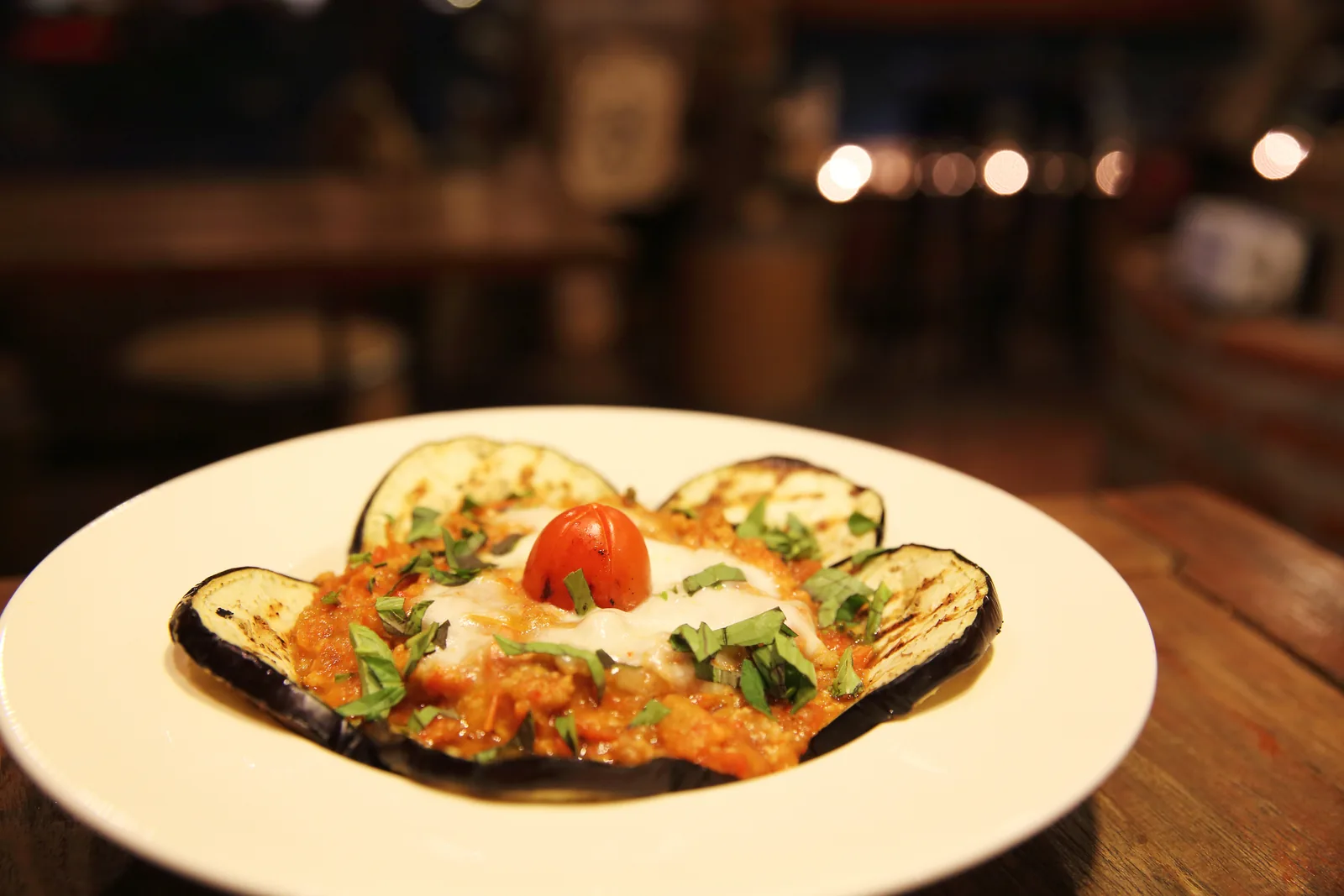
A good starter gives the meal a direction. If you are drawn to tomatoes, herbs and soft cheese, Parmigiana di Melanzane is worth considering. Da Vinci lists aubergine, cherry tomato sauce, mozzarella and basil pesto in its version. It is a different starting point from a crisp salad: the attraction is the combination of vegetables, tomato and cheese, rather than a large collection of raw ingredients. Think about what you would like afterwards. If your main course will also be rich in cheese, you might prefer a fresher opening; if you are planning a simpler main, this kind of starter can supply the more substantial first part of the meal.
Insalata Vegetariana takes another approach. The menu combines garden salad and seasonal vegetables with walnut, pomegranate, parmesan and balsamic. That gives you more to consider than the word “salad”: crunchy nuts, fruit and a cheese finish can make a meaningful difference to your choice. You may enjoy the fruit element, or you may prefer the more savoury profile of aubergine and tomato. Read the whole description before deciding. A salad containing nuts and cheese is also a different proposition from a plain side salad, so ask about the portion if you are thinking of ordering it instead of a main course.
There is also a burrata dish in Da Vinci’s Exclusive Menu, paired with beetroot, rocket and caramelised walnut. Ask whether the Exclusive Menu selection is available for your visit before planning around it. Here the appeal is the contrast between creamy cheese, beetroot and a nut garnish. If the cheese names are unfamiliar, our guide to burrata and mozzarella explains the distinction. You do not need to become a cheese expert before ordering, but knowing whether you want a creamy centre or a firmer texture makes the decision easier. It also helps when choosing between a cheese-led starter and a pizza with cheese as its main feature.
Decide between pasta and pizza by the experience you want
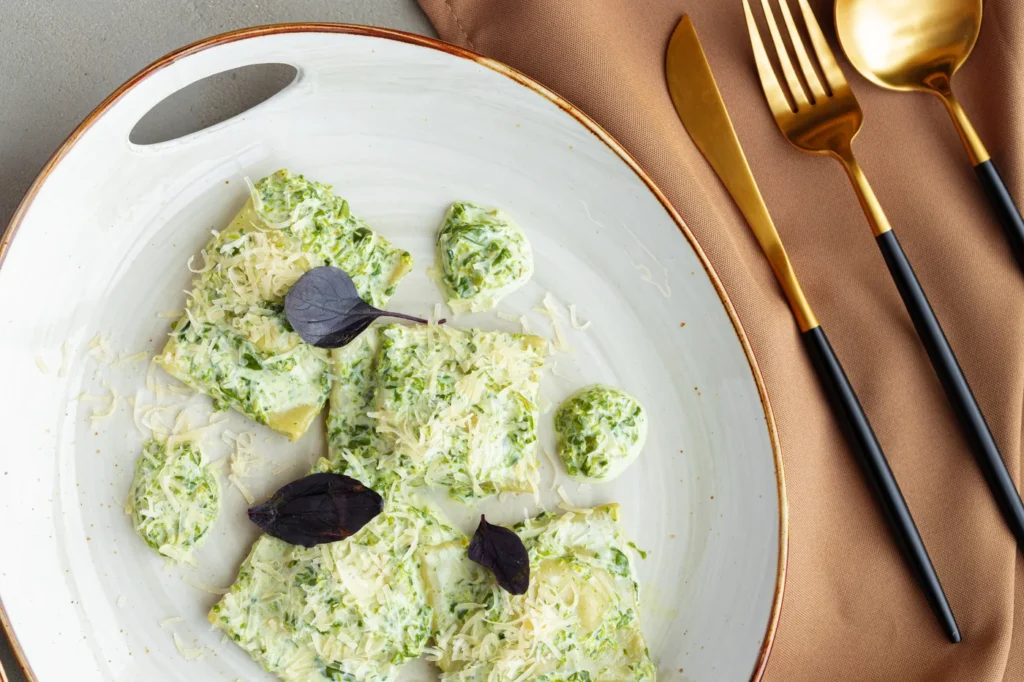
Pasta is a natural place to look when you want a satisfying dinner without ordering meat or fish. The important detail is the complete dish, not simply the pasta shape. Da Vinci’s Ravioli Ricotta e Spinachi is described as handmade ravioli with ricotta cheese and spinach and basil pesto. For a guest looking for a combination of pasta, cheese and herbs, that is a more useful starting point than choosing a meat sauce and asking for the meat to be removed. Consider the pesto as part of the dish rather than a minor garnish: if you particularly enjoy basil, it may be one of the reasons to choose the ravioli.
The same approach helps you rule out pasta dishes that do not suit the evening you have in mind. Rigatoni con Ragù di Manzo contains beef ragout, while the menu’s carbonara is named for guanciale. Spaghetti dello Chef includes prawns, and Cavatelli ai Frutti di Mare includes seafood. A familiar pasta name or a photograph of tomato sauce is not enough to establish what is in the dish. Read the filling, sauce and finishing ingredients together. If you are unsure of an Italian term, ask the team to explain it before ordering; that is much simpler than discovering an unwanted ingredient when the plate arrives.
Pizza offers a different set of choices, especially if you enjoy a combination of bread, cheese and contrasting toppings. Pizza Formaggio di Capra brings together mozzarella, goat cheese, pear, dried figs, walnuts and caramelised balsamic. This is the option to consider when a sweet and savoury combination appeals to you. The fruit is part of its character, not an incidental decoration. If you prefer tomatoes and herbs to fruit on pizza, Pizza Straciatella is the clearer starting point: its menu description lists mozzarella, stracciatella cheese, cherry tomato and basil pesto. Both give you a reason to order the dish as it is described, rather than beginning with a meat-topped pizza and a list of alterations.
When deciding between the two, picture the flavours you would want in the last slice as well as the first. A pear and goat cheese combination can be appealing when you want something different from a tomato-led pizza, while cherry tomato and basil may be closer to the meal you already have in mind. Neither choice needs to be presented as the “better” pizza. If you want a cheese-focused dinner, choose the combination that interests you; if you would rather have pasta and a sauce with each forkful, choose the ravioli. Appetite and personal preference are more useful guides than assuming that a dish without meat must be a small or restrained meal.
Explain dietary requirements before choosing the final dish
“I do not feel like meat tonight” and “I follow a strict vegetarian diet” are different requests. For the first, the menu’s ingredient descriptions help you select the flavours you want. For the second, the kitchen may need to check ingredients that a short description does not fully identify. Some cheeses are made using animal rennet, and a pesto or another prepared sauce may contain ingredients that matter to your diet. Ask which dishes meet your requirements, including the cheese and sauces, instead of relying only on a vegetarian-sounding name. That keeps the conversation specific and gives the team a clear question to answer.
Vegan dining calls for a separate conversation because the cheese-based choices discussed here contain dairy. Removing a visible topping does not establish what is in a pasta dough, filling or sauce, and a restaurant may not be able to alter every dish. Explain what you avoid and ask which complete options can be prepared for you. An allergy also needs to be stated explicitly rather than described as a dislike or a general preference. The team needs to know the relevant ingredient and discuss preparation, not just identify a dish whose description happens to leave it out. Confirm these details before committing to an order.
You can make the discussion straightforward by starting with a dish that interests you: “I like the sound of the ricotta ravioli. Is the cheese and pesto suitable for a vegetarian diet?” That is more precise than asking whether everything in the pasta section is vegetarian. If you need a change, ask what is possible rather than assuming it is included. An alternative dish may be a better answer than removing several ingredients from your original choice. For requirements that will determine whether you can dine at the restaurant, contact the team in advance so that you can plan the visit with a clear understanding of the available options.
Put together a dinner you will enjoy from start to finish
Once you have a main course in mind, choose the rest of the meal around it. A salad followed by ricotta ravioli is one possible way to combine a fresh opening with a cheese-led pasta dish. Parmigiana followed by a pizza is a more substantial direction, depending on your appetite and the portions. You do not have to order a starter simply because it appears before the pasta section, and you do not need a separate meat or fish course after pasta. A pizza on its own can be the dinner you came for. If you are uncertain about quantities, ask about portions before ordering several dishes at once.
For two people with different tastes, individual main courses often make the choice easy: one can order ravioli while the other chooses pizza, without either having to settle for the same flavour profile. If you would like to share a starter, ask about the serving size and sharing arrangements. Keep any dietary requirements attached to the person and the dish they concern, particularly when plates are being passed around. For a larger table, our guide to planning a group dinner covers the broader booking and ordering questions. The aim is to enjoy dinner together without making everyone order an identical meal.
Leave room for dessert if that is part of the evening you enjoy. Da Vinci’s menu includes Tiramisù al Pistacchio, chocolate soufflé with crumble and vanilla cream, and Cannoli Siciliani with ricotta-based creams. Choose according to your appetite and the flavours you would like to finish with; the pistachio option may tempt you more than chocolate, or an espresso may be all you want after pizza. Apply the same dietary checks to dessert as to the earlier courses when they matter to you. There is no need to make dinner longer or heavier just to follow an imagined sequence of Italian courses.
For a meal at Ristorante Da Vinci in Lapta, start with the dish you genuinely want to eat, then consider what would complement it. Aubergine and tomato, ricotta and herbs, or goat cheese with pear and figs each offer a different direction for an evening without meat. Bring your preferences and any dietary requirements into the booking conversation, rather than saving important questions until the food arrives. When you are ready to plan your visit, contact the Da Vinci team to book a table and discuss the choices that suit your dinner.